Claim
The system significantly lowers land-use and externality costs compared to conventional rocket-based launch.
Evidence
By land-use and externality costs, we mean the full set of economic and social costs associated with allocating land to a launch system and with the impacts that system imposes on surrounding areas. This includes not only the direct cost of acquiring or leasing land, but also the opportunity cost of removing (or not returning) that land from/to alternative residential, commercial, or ecological uses; the devaluation of nearby property due to noise, risk, or perceived nuisance; and secondary costs such as higher insurance premiums or the need for land-use restrictions and mitigation measures.
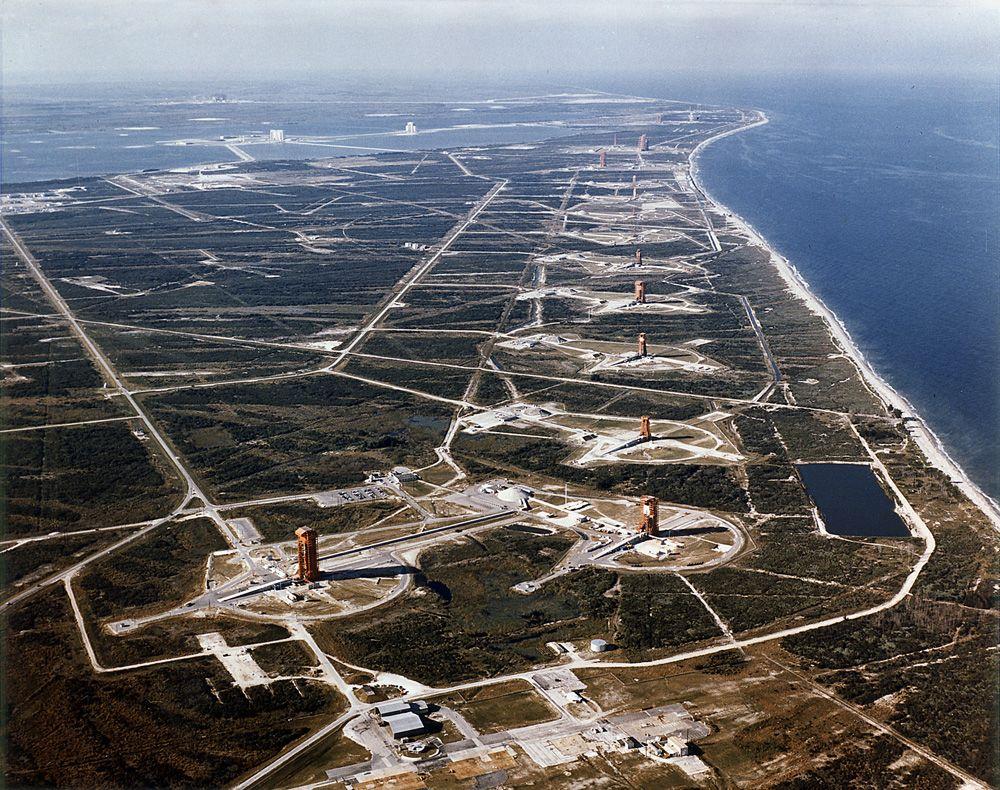
For conventional chemical rockets, these costs are substantial. A large-scale space program that delivers large amounts of mass to destinations such as the Moon or Mars requires frequent launches from a major spaceport, which in turn demands a vast, permanently dedicated land area. Kennedy Space Center, for example, occupies roughly 580 square kilometers. That land cannot be used for other purposes, creating a large opportunity cost. In addition, the intense acoustic loads of launches and the sonic booms produced by returning reusable stages can devalue surrounding property and constrain nearby development. If flight paths pass over occupied land, perceived risk of debris or accidents can further depress property values and increase insurance costs. The result is not just the footprint of the launch site itself, but a broader zone of restricted or devalued land around it.
The VPSL system is designed to avoid most of these costs. Its horizontal acceleration section is deployed offshore and underwater, where it does not compete with valuable coastal land uses. The ramp section is installed within a tunnel, allowing the land above it to remain available for normal use without permanent acquisition. The elevated evacuated tube (EET) is deployed temporarily at high altitude during launch seasons and does not require exclusive control of the land below it. As a result, the permanent surface footprint of the system is limited primarily to a relatively small coastal factory site—on the order of one square kilometers—and a storage and landing area near the mountain top for the coiled EET, on the order of 16 of square kilometers, which is sited in less valuable terrain.
Because vehicles travel within an evacuated tube, VPSL does not generate the extreme launch noise that characterizes rocket spaceports, and therefore does not impose broad noise-related devaluation on surrounding land. When the spacecraft exits the elevated evacuated tube, it does so at high altitude and far offshore, so any sonic booms associated with atmospheric transit occur well away from populated areas.
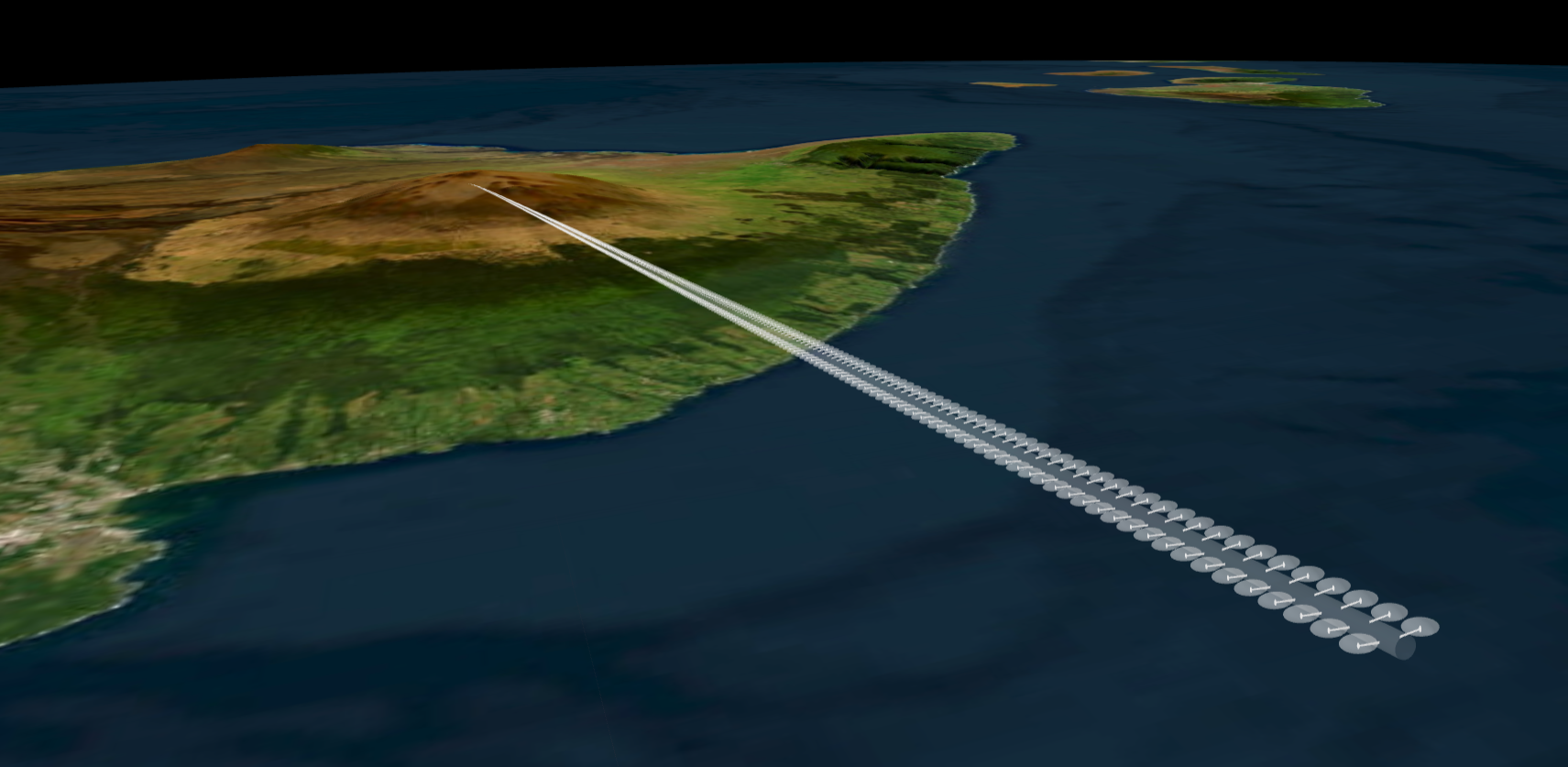
The primary remaining externality is noise from the EET’s lift fans when the tube is deployed. Two short-duration events occur at the start and end of each launch season, when the coiled EET lifts off and unwinds, and later when it returns to its storage site. In addition, during the launch season the overland portion of the EET will hover above occupied land for roughly two weeks every two years. These scenarios require evaluation to determine whether the fan noise could materially affect property values. There may also be subjective impacts, as some residents could perceive the presence of the EET as a visual intrusion or a source of risk, even if objective hazards are low.
Even accounting for these factors, the VPSL architecture avoids the need for a vast, permanently restricted spaceport and the wide surrounding buffer zones typical of rocket launch systems. By confining most infrastructure to offshore, underground, or temporary high-altitude elements, and by largely eliminating launch noise and overflight of populated areas, VPSL substantially reduces both the land it must acquire and the external impacts imposed on neighboring land. In this way, it significantly lowers the land-use and externality costs associated with large-scale space launch operations compared to conventional rocket-based launch.
If a terrestrial mass driver significantly reduced the need for conventional rocket launch infrastructure, portions of today's sprawling launch complexes could potentially be leased for commercial development. The value unlocked by even a fraction of these prime coastal properties could reach tens of billions of dollars, helping to offset the cost of building the replacement launch infrastructure.
Reviews
The following reviews are limited in scope to the validity of the claim made above, and do not imply that the reviewer has taken a position regarding any other claim or the overall feasibility of a concept that is supported by this claim.
No reviews yet.