Claim
The System Can Reduce the CO2-Equivalent Emissions on Earth of a Large-Scale Mars Settlement Effort by at least 100x
Evidence
CO2e Emissions for Chemical Rockets
One proposal for establishing a human presence on Mars involves using a methylox-fueled heavy-lift rocket with refueling in LEO before departure for Mars. It is difficult to estimate how much mass would need to be shipped from Earth to achieve a large-scale settlement, such as a city on Mars, but some have suggested that a delivered mass of approximately one million metric tons would be required. CO₂-equivalent greenhouse gas emissions can quantify one aspect of Earth's environmental impact. However, other factors, such as noise pollution, space debris, and ozone depletion, are not captured by the CO₂e metric.
If each ship departing Earth carries 100 tons, then 1,000,000 / 100 = 10,000 ships will need to leave Earth.
Each ship must be refilled before departing for Mars. To support refilling, tanker vehicles will need to repeatedly rendezvous with a propellant depot in low Earth orbit, transfer some propellant, deorbit, and land. When the propellant depot is full, an interplanetary spacecraft will rendezvous with it, refill, and then depart for Mars.
The Flight Test 10 of SpaceX's Starship reached space on a 220x47 sub-orbital trajectory with approximately 40 tons of propellant remaining in its tanks. On this flight, a tower catch of the booster was not attempted, but the booster made a "simulated landing" out at sea.
The altitude of the proposed propellant depot is unknown. It will require a cryogenic cooling system to prevent boil-off, and a large solar array to power that system. If the depot is intended to remain in orbit indefinitely, it should be placed at an altitude high enough that routine reboosts do not impose excessive propellant demand. Without reboosts, a 250 km orbit will decay in weeks, whereas a 550 km orbit will decay in years (see figure below).
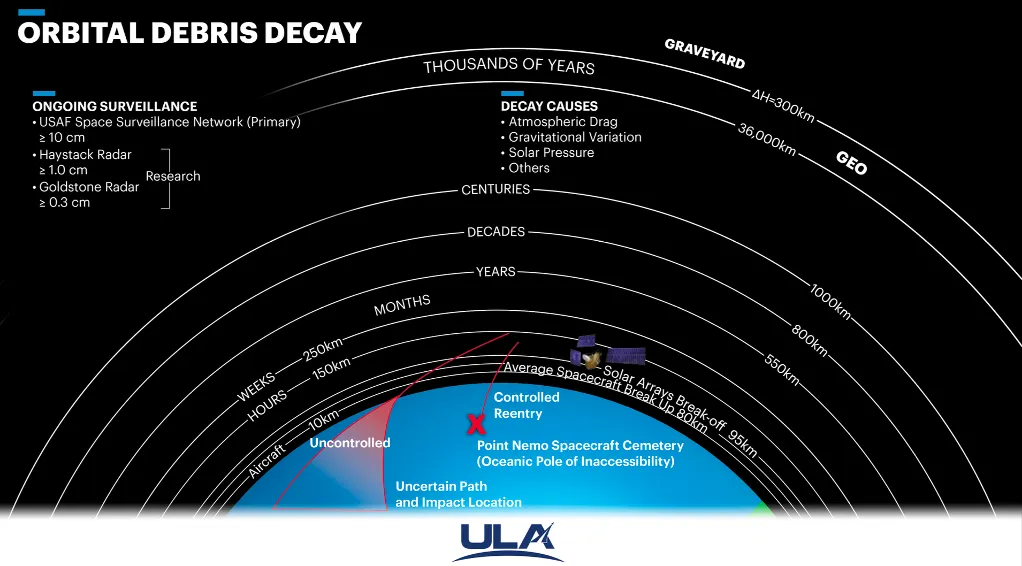
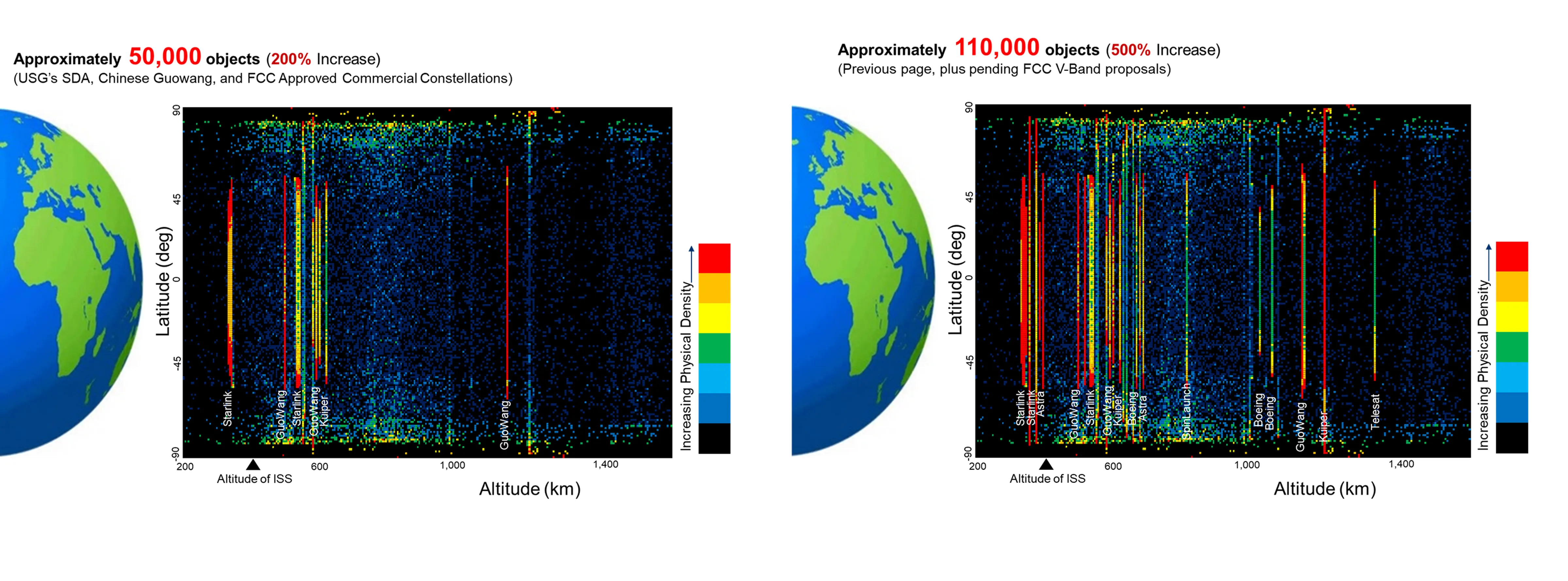
The ISS's orbital altitude of ~400 km likely strikes a reasonable compromise. SpaceX has received approval from the U.S. Federal Communications Commission (FCC) to operate Gen2 Starlink satellites in lower orbital shells around 340 km to 360 km altitude, including ~350 km, so it is possible that the propellant depot could be placed at a similar altitude.
Let's assume that the propellant depot's orbital altitude is 350 km. To reach that orbit from the 220x47 elliptical orbit of Flight Test 10, the rocket will first need to raise its perigee from 47 km to 350 km, which will require 90 m/s of delta-v. Then it will need to circularize its orbit, which will require an additional 38 m/s of delta-v. After making these maneuvers, the rocket will have consumed 6.4 tons of its remaining propellant, leaving 40-6.4=33.6 tons. Then it will need to perform a deorbit burn and retain some propellant for its landing burn. Let's assume it needs to keep 10 tons of propellant for these burns. This means that each tanker flight can transfer 33.6-10 = 23.6 tons of propellant to the propellant depot.
The delta-v required to travel to Mars depends on the Mars transfer window. If we assume that missions start in 2035, the minimum delta-v needed for the next seven windows is 6/26/2035 - 3210 m/s 8/20/2037 - 4030 m/s 9/21/2039 - 3540 m/s 10/20/2041 - 3130 m/s 11/15/2043 - 3000 m/s 12/14/2045 - 3110 m/s 3/20/2048 - 3260 m/s
The average of these is 3325 m/s. The ships will also need ~200 m/s of delta-v to land on Mars and perhaps a delta-v boil-off-and-safety margin of 20%, so altogether . Assuming a dry mass of 150 t and a payload mass of 100 t, the vehicle's final mass, , will be 250 t. We can calculate the initial mass, , using the rocket equation
The propellant mass will be
In this case, flights will be needed to deposit enough propellant into the depot. An additional flight will be required to launch the interplanetary ship, and (possibly) one additional flight will be necessary to supply propellant to the depot for its reboost burns for a total of 22+1+1=24 flights. We assume the depot will be reused multiple times, so that we can ignore the propellant used for its launch.
If we use numbers for the V2 version of Starship (as the numbers for later versions are aspirational), the propellant load per flight will be 3250 + 1500 = 4750 tons.

Because Raptor operates fuel-rich at an overall mixture ratio near 3.6:1 (O₂:CH₄ by mass), the exhaust chemistry is oxygen-limited. For one ton of methalox propellant, approximately 0.783 tons of O₂ and 0.217 tons of CH₄ enter the chamber. Stoichiometric combustion would require a 4:1 mass ratio, so only
of methane can fully oxidize. The remaining
appears as unburned methane and intermediate fuel-rich products.
Complete oxidation of the O₂-limited methane produces
and
One ton of methalox propellant (CH4 and O2) therefore generates roughly 0.538 tons of CO₂, 0.440 tons of H₂O, and 0.021 tons of unburned CH₄, with the methane contributing a CO₂-equivalent warming of tons CO₂e (using the IPCC AR6 GWP value of 27.2).
Therefore, for each ton of propellant burned, 0.538 + 0.576 = 1.114 tons of are released into the atmosphere.
Radiative Forcing
By altering atmospheric composition, greenhouse gas emissions slow Earth’s heat loss to space. Contrails from aircraft and rockets create an additional, but shorter-lived radiative forcing.

Depending on the rocket and propellant chemistry, contrail-related radiative forcing can involve a mix of short-lived and long-lived components. Soot (black carbon), for example, is a particulate emitted by open-cycle RP-1–fueled engines such as those used on Falcon 9 and Falcon Heavy. When injected into the upper troposphere or stratosphere, black carbon can persist for months to several years, absorbing solar radiation and altering atmospheric heating rates over that period. By contrast, newer heavy-lift launch vehicles such as Starship and New Glenn use LOX–methane (methalox) engines. There is currently little to no evidence that properly operating methalox engines emit significant amounts of soot, suggesting that long-lived black-carbon-driven forcing is likely negligible for these vehicles.
If we shift our focus to contrails produced by methalox engines, the dominant exhaust components are water vapor (H₂O), carbon dioxide (CO₂), and trace amounts of partially oxidized hydrocarbons such as carbon monoxide (CO), formaldehyde (CH₂O), and unburned methane (CH₄). We already accounted for the CO2. Of the remaining species, water vapor is by far the most abundant and is the primary driver of any contrail-related radiative forcing, through condensation and freezing into ice crystals that modify both outgoing longwave and incoming shortwave radiation. However, unlike CO₂ or unburned CH₄, water vapor injected by rocket exhaust is a short-lived component: outside of the stratosphere it typically precipitates out or mixes away on timescales of hours to days, and even when deposited at higher altitudes its residence time is generally limited to days to weeks. As a result, water-driven radiative forcing from methalox contrails is transient and strongly dependent on launch rate and atmospheric conditions, rather than cumulative over decades.
One metric ton of CO₂ added to the atmosphere produces an incremental global radiative forcing of approximately 800 W, and a substantial fraction of that forcing persists for centuries: IPCC assessments indicate that roughly 15–40% of a CO₂ pulse remains in the atmosphere for more than 1,000 years IPCC AR6 WG1. By contrast, one metric ton of stratospheric water vapor produces a much larger instantaneous global radiative forcing of roughly 200,000 W, but with a far shorter lifetime. Observations following the 2022 Hunga Tonga eruption indicate an effective stratospheric H₂O residence time of about 4 years M. R. Schoeberl et al., 2025. On an instantaneous forcing basis, one ton of stratospheric H₂O is therefore equivalent to roughly 250 tons of CO₂e. However, because water-driven forcing decays rapidly while CO₂ forcing persists, a time-integrated comparison is more relevant. When integrated over a 25-year horizon, one ton of stratospheric H₂O corresponds to roughly 30–40 tons of CO₂e, reflecting its strong but short-lived climate impact.
If we include the stratospheric H2O and consider the radiative forcing over a 25-year time horizon, then for each ton of propellant burned in the stratosphere, the CO2e is , with the first two terms representing CO2 and CH4 that is released into the stratosphere, and the last term is radiative forcing associated with H2O. Telemetry from Starship IFT10 flight, shows that the booster still had approximately 60% of it's propellant at 10 km, which represents the lower bound of the stratosphere (while the exact tropopause altitude varies with latitude and season, this altitude provides a conservative lower bound for identifying exhaust that may reach or influence the stratosphere). From this information we can estimate that approximately of propellant is burned below 10 km (in the troposphere), and of propellant is burned above 10 km (in the stratosphere and mesosphere).

Bringing these calculations together, we need 10,000 ships to depart Earth, with 24 launches to LEO per ship, 1300 tons of propellant burned in the troposphere, 3450 tons of propellant burned in the stratosphere and mesosphere, a conservative estimate of 1.114 tons of CO2e per ton of propellant burned below 10 km, and 16.6 tons of CO2e per ton of propellant burned above 10km. The total equivalent greenhouse gas emissions are thus
This is roughly 25% of humanity's annual greenhouse gas emissions in 2025.
Note that this figure reflects only the propellant burned; it does not include the CO2 emissions associated with manufacturing or operations. It is also based on current data. Starship may become heavier if additional structure or reserve propellant is required to achieve reliable, fully reusable operations, particularly if a gentler booster reentry profile demands more fuel. Conversely, it could become lighter as engineers refine the design and further reduce its structural mass fraction.
CO2e Emissions for Variable Pitch Screw Launch (VPSL)
VPSL uses electricity, but humanity emits 412g of CO2e per Kilowatt-hour, and the United States emits just 300g of CO2e per Kilowatt-hour. There is a downward trend in the data, and we are likely to see these values go down over time as new energy generation capacity is added to the grid.
Each vehicle launched with the VPSL system, as described in this paper, will place 17140 kg on Mars, so to deliver 1 million tons to Mars, we will need to launch 58,343 vehicles. Let's assume the daily launch window is 2 hours, there are 14 days in the launch season, and the total mass can be delivered over 20 seasons. In this case, the average launch rate will need to be
The Elevated Evacuated Tube will consume 6.85 GW for 320 hours per launch season. Multiplied by 20 launch seasons, this is
The electrical energy required by the screws per launch is estimated at 0.636 GWh per spacecraft. For all the spacecraft, the energy needed is
If we use the US CO2e-per-kWh value of 300 g/kWh (which equals 300 tons/GWh), the total CO2e is
Each spacecraft also burns 2,333 kg of Hydrolox propellant, which will be deposited as water vapor into the stratosphere. If we use the same 30-40 (average 35) tons of CO2e value that we used earlier for Starship's stratospheric H2O, then
Altogether, the environmental impact of sending one million tons to Mars using VPSL would then be of CO2e emissions. Compared with the of emissions from methyox-powered heavy-lift rockets, this is 485 times lower.
While there are undoubtedly uncertainties in several of the assumptions used here—including the fraction of exhaust reaching the stratosphere, the effective residence time of water vapor, and future vehicle performance—these uncertainties do not materially affect the conclusion. Even when conservative assumptions are applied that tend to overestimate rocket impacts and underestimate electric-launch impacts, the resulting CO₂-equivalent emissions from methalox-powered heavy-lift rockets exceed those of the VPSL system by several hundredfold. It is therefore reasonable to conclude, based on available emissions data and well-established atmospheric physics, that the VPSL architecture can reduce the Earth-side CO₂-equivalent emissions of a large-scale Mars settlement effort by at least two orders of magnitude relative to chemical rockets.
Reviews
The following reviews are limited in scope to the validity of the claim made above, and do not imply that the reviewer has taken a position regarding any other claim or the overall feasibility of a concept that is supported by this claim.
No reviews yet.